Legal Services NYC Testimony on Suspending Evictions During Code Blue
Summary of Testimony
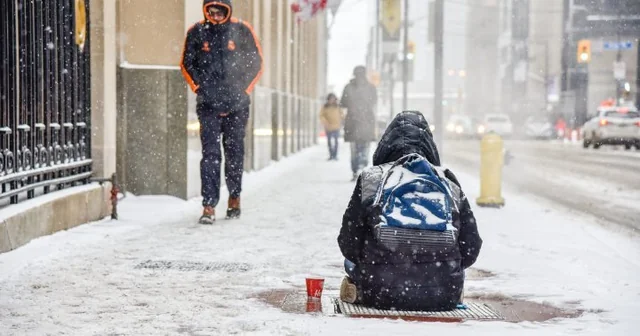
For people experiencing homelessness, freezing temperatures can be dangerous and even deadly. That’s why New York City activates its Code Blue policy when temperatures drop below freezing, providing greater access to shelter and outreach services. But the City can still allow tenants to be evicted and become homeless during those same dangerous conditions.
Legal Services NYC urges the City to establish a clear policy suspending evictions whenever Code Blue is in effect—helping prevent unnecessary illness and death and protecting New Yorkers when they are most vulnerable.
Testimony for Protecting Lives in the Cold: Oversight of NYC’s Code Blue Operations presented on February 10, 2026
Dear Members of the New York City Council:
Legal Services NYC is the largest civil legal services provider in the country, and our
neighborhood-based offices and outreach sites across all five boroughs assist over 100,000
individuals annually. Legal Services NYC is dedicated to fighting poverty and seeking racial,
social and economic justice for low-income New Yorkers. This testimony is being submitted to shine a light on a critical contradiction in the City’s policies that puts New Yorkers’s lives at risk every winter.
Wisely, the City created a Code Blue policy that goes into effect when temperatures drop below freezing to ensure that the unhoused can easily gain access to shelter. The City also deploys outreach teams to offer services and shelter and warming centers are utilized across all five boroughs. This policy is in place for a good reason – living outside during freezing temperatures is not only dangerous but can be deadly.
The City recognizes that for the unhoused, freezing temperatures present a real threat, yet at the same time the City is working to bring the unhoused inside it allows City Marshals to continue with evictions — thereby rendering a new class of New Yorkers homeless. This is an
unconscionable policy contradiction.
Legal Services NYC analyzed, using publicly available data the number of evictions that
occurred across the City when the temperature was below 32°F thereby triggering a Code Blue response and found that from 2017 to date there were nearly 14,000 evictions carried out. And, even more shocking, on days when the temperature in New York City was below 20°F degrees, 2,032 individuals and families became homeless as a result of an eviction.
These figures are assuredly an underestimate because they only take into account the actual temperature and not the wind chill which the City’s Code Blue policy takes into account. Climate change is exacerbating the risks posed by both excessive heat and extreme cold. Last summer Legal Services NYC released a report, The Deadly Impact of Evictions During Extreme Heat, on the dangers of being evicted during periods of extreme heat. Last summer’s brutal heat waves were followed by this viciously cold winter, the coldest many of us can remember. We know from these past weeks how dangerous it can be to be unhoused during below freezing temperatures. And yet last week when the actual temperature on Monday morning at approximately 9am was 20°F and 9°F with the wind chill, City Marshals began evicting tenants and ultimately evicted 99 individuals and families.
The human cost of this contradiction is real. There is ample evidence to support the fact that an eviction is a violent disruption that has long-term destabilizing impacts. Nearly 17,000 New York City tenants and their families were evicted in 2025.4 Evicted tenants are often forced to relocate to poorer and higher-crime neighborhoods with lower performing schools and fewer job opportunities than those who move by choice.5 Mothers who are evicted are more likely to suffer from depression and experience elevated stress levels, and they and their children tend to have poorer health outcomes than those who were not evicted.6 The day an individual or family loses their home can be one of the worst days of their lives and it also can be life threatening as losing one’s home can significantly increase the risk of suicide.
A tenant attempting to stop an eviction must travel to court to file an emergency motion or travel to a shelter intake center in another borough all while being exposed to the dangerous elements. Families evicted during Cold Blue periods face immediate danger, particularly those with children, elderly members, or individuals with health conditions. Emergency shelters, already strained during extreme weather, may not be able to adequately absorb the additional displacement caused by evictions. Many families evicted during winter months cannot secure alternative housing immediately and face the choice between overcrowded shelters, unsafe temporary arrangements, or exposure to the elements.
The City has acted to suspend evictions during periods of extreme weather in the past. Evictions were suspended the week immediately following the late January storm. And on other occasions the City has suspended evictions during extreme weather events but unfortunately there is not a uniform policy. The notice to suspend evictions are typically not issued until the day prior so tenants may still be taking steps to either plan for an eviction or to prevent it such as traveling to court during dangerously cold weather. The Department of Investigation needs to implement a policy, rather than an ad hoc day by day response, that makes it clear when it is too dangerous to evict.
As climate change intensifies extreme weather events across all seasons, New York City has an opportunity to take a bold step on behalf of its most vulnerable residents when they need shelter most. In doing so, the City will be joining other jurisdictions who have implemented policies suspending evictions during periods of extreme weather. Both Washington, DC, and Cook County Illinois, which includes Chicago, have recognized that evictions during extreme cold are dangerous and have policies in place to protect tenants.
Allowing evictions to occur when it puts New Yorkers at risk of serious harm or even death is
inhumane. New York City has recognized that extreme cold is a grave threat to our fellow
citizens who are unhoused, yet the City allows people to become newly unhoused during those same conditions. By establishing a uniform standard that suspends evictions when a Cold Blue is in effect, New York City can prevent unnecessary illness and death, reduce strain on emergency services and the shelter system, and demonstrate that basic human dignity and public health are paramount.
Thank you for your time and consideration.
Respectfully submitted,
Carolyn M. Norton
Legal Services NYC
Join us. Demand Justice.
In this extraordinarily challenging moment, your partnership with LSNYC is critical. Please join us by making your gift today.